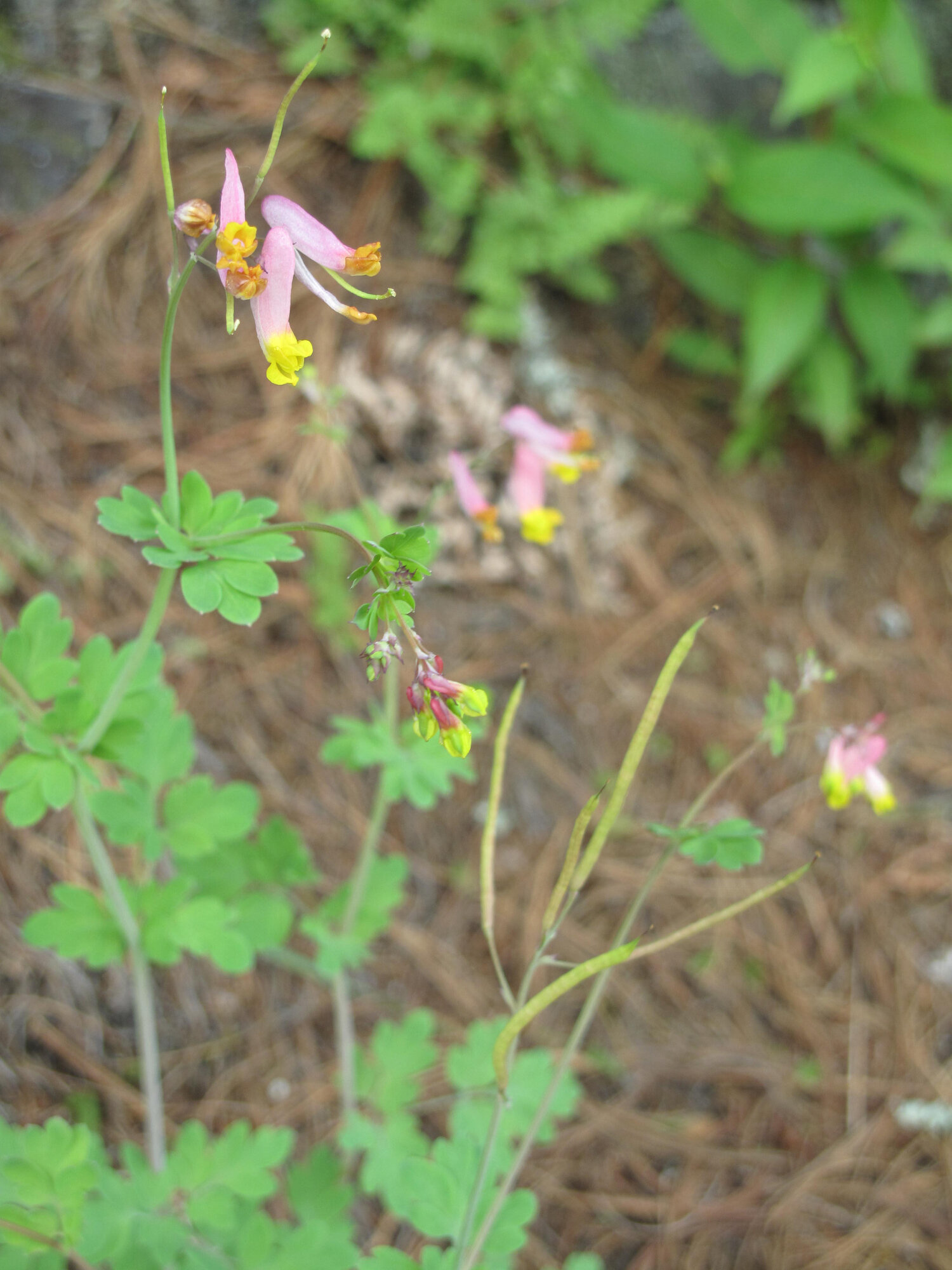
Pale Corydalis
Capnoides sempervirens
-
Common namePale Corydalis
-
Latin nameCapnoides sempervirens
-
Plant typeperennial
-
Flower colorPink & yellow
-
Bloom timeSpring through early fall
-
Height12-36"
-
Chelsea chopNo
-
Light requirementsFull sun to part shade
-
MoistureAverage to very dry
-
Native to OntarioYes
-
Locally nativeYes
-
Deer resistantYes
-
Ecological benefitPioneer species, meaninig it is one of the first plants to colonize "disturbed" areas, such as recently burned forests or rocky clearings. It provides immediate erosion protection while its non-competitive nature allows other native plants to naturally succeed it over time. The highly fragrant mint oils in the foliage function as an aromatic pest confuser. The powerful scent masks the smell of neighbouring plants, making it harder for destructive garden pests to track down nearby vegetation
-
NotesThe nectar-rich, tubular flowers are a vital food source for long-tongued bees (especially bumblebees) and Skipper butterflies. Because it has an exceptionally long bloom time—often from May until the first freeze—it provides a reliable, late-season energy source when other flowers have finished. The seeds feature an elaiosome (a fleshy, nutrient-rich "food package"). Ants carry these seeds back to their nests to eat the elaiosome, effectively planting the seeds in protected, nutrient-rich underground locations away from predators like mice or birds.
-
Picture