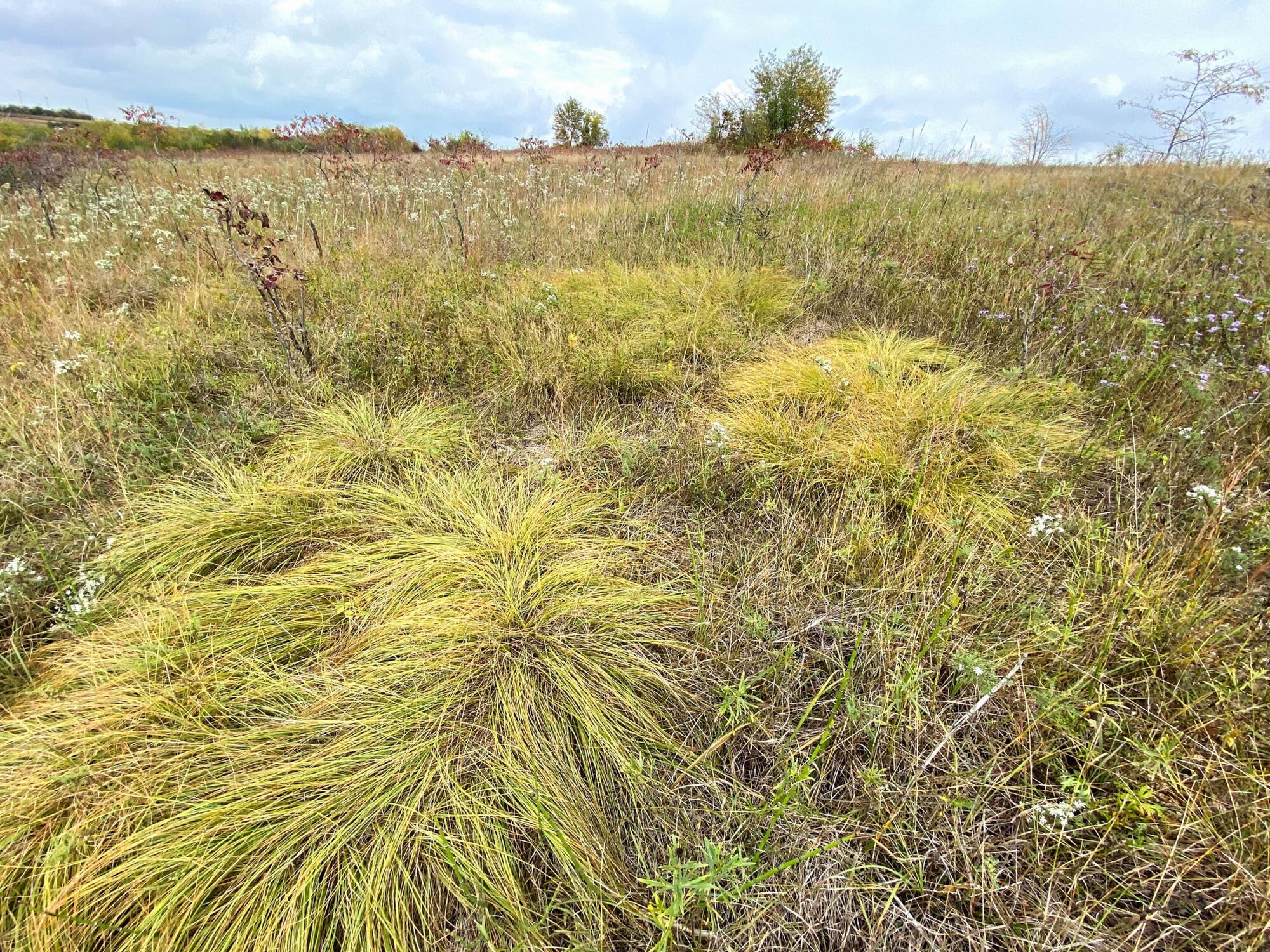
Prairie Dropseed
Sporobolus heterolepis
-
Common namePrairie Dropseed
-
Latin nameSporobolus heterolepis
-
Plant typeperennial
-
Flower colorHighly unique, open-branching panicles in shades of pinkish-brown, gold, and green
-
Bloom timeLate summer through mid fall
-
Height12-16" (flower stalks stand 24-36")
-
Chelsea chopNo
-
Light requirementsFull sun
-
MoisturePrefers dry to medium moisture. It is exceptionally drought-tolerant and heat-tolerant due to its deep root system, and thrives in rocky or lean soil.
-
Native to OntarioYes
-
Locally nativeNo
-
Deer resistantYes
-
Ecological benefitTrue to its name, its tiny, round, nutritious seeds "drop" straight to the base of the clump in autumn. This creates a vital autumn and winter feeding ground for ground-foraging native songbirds like sparrows and juncos. t provides crucial larval food for several rare or declining native prairie butterflies, specifically the Leonard’s Skipper and the Dusted Skipper. Its fine-textured roots tolerate heavy clay, road salt, and drought, making it an excellent native choice for borders along driveways or problematic rocky slopes.
-
NotesWhile it is natively adapted to the southern and eastern regions of Ontario, wild populations are mostly restricted to undisturbed remnant tallgrass prairies, open savannahs, and specialized limestone alvars. Because the Westport and Frontenac Arch regions feature rocky, thin soils over limestone or granite, Prairie Dropseed is perfectly suited to local gardens. Planting it helps reintroduce an ecologically valuable species that has faced habitat loss across the province.t is notoriously slow to mature, often taking 2 to 3 years to establish from a small seed or plug into a full, dramatic fountain shape. Avoid over-watering or over-fertilizing to speed it up; rich conditions will only weaken its structural rigidity.
-
Picture