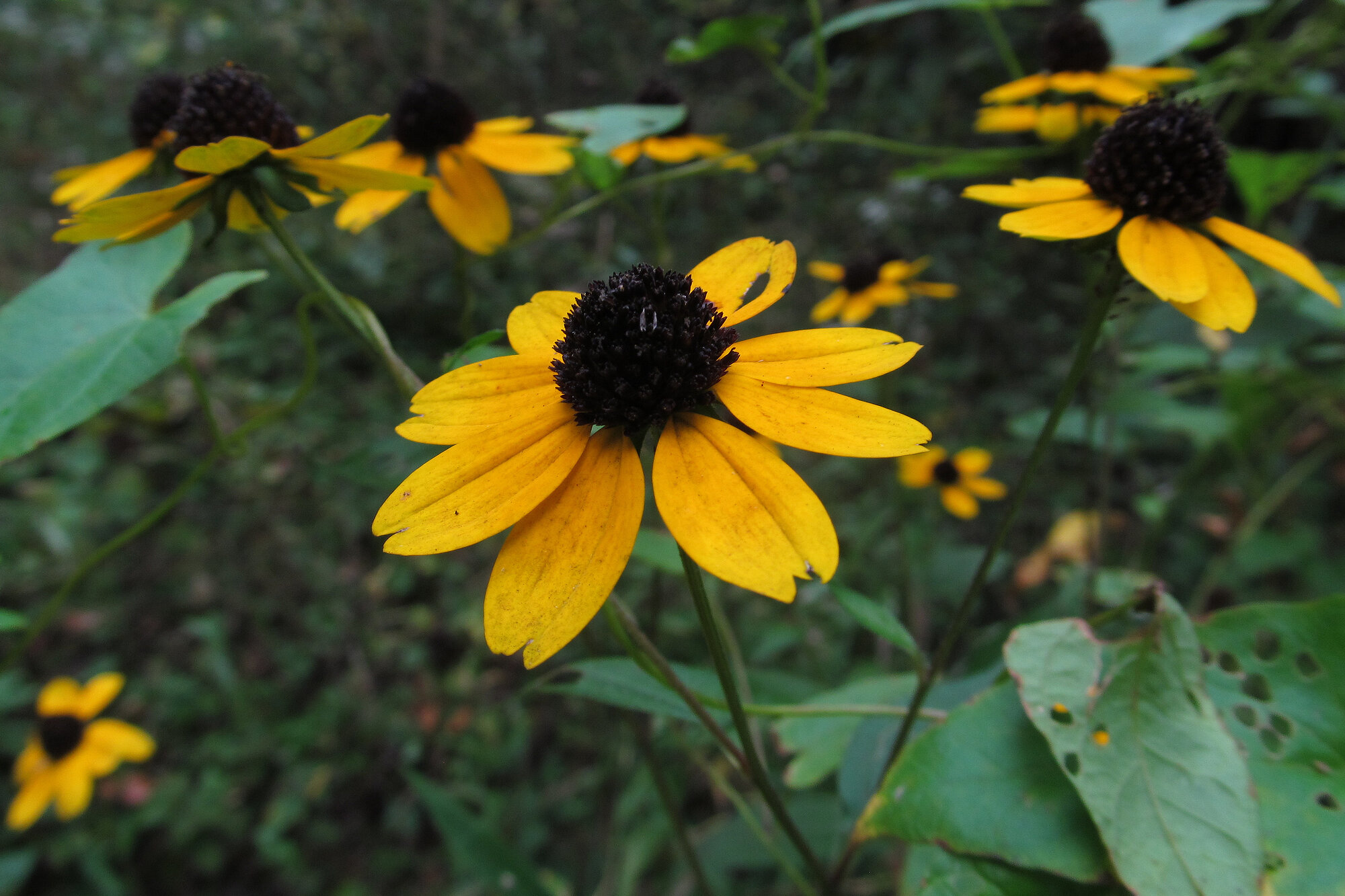
3-lobed Black-eyed Susan
Rudbeckia triloba
-
Common name3-lobed Black-eyed Susan
-
Latin nameRudbeckia triloba
-
Plant typeperennial
-
Flower colorNumerous small, golden-yellow flowers (about 1–2 inches wide) with dark, chocolate-brown central disks.
-
Bloom timeMid summer through fall
-
Height24-60"
-
Chelsea chopYes
-
Light requirementsPrefers full sun to partial shade. It is more shade-tolerant than the common Black-eyed Susan (R. hirta).
-
MoistureAverage though it is quite adaptable. It can handle clay, loamy, or slightly rocky soils and has moderate drought tolerance once established.
-
Native to OntarioNon-native to Ontario
-
Locally nativeNo
-
Deer resistantYes
-
Ecological benefitBecause it blooms so late and so profusely, it is a vital nectar source for bees, wasps, and butterflies preparing for winter or migration. It supports several species of Andrena bees (mining bees) that specialize in the Asteraceae family. Like its relatives, it serves as a larval host for the Silvery Checkerspot butterfly.
-
NotesThe abundance of small seeds makes it a high-value winter food source for songbirds, including chickadees and finches.
-
Picture